
Wednesday, February 11, 2026
How Next-Generation Leaders Deploy AI to Capture Top Talent


Randi Spence spent six years at Therapy Partners before pitching the senior partners on a Fort Worth clinic. They backed her plan. She built it, grew it to five providers, and earned a partnership stake.
Her journey through every level of healthcare, from staff clinician to clinic director to partner, gave her a clear view of what breaks down in independent practices and what really matters to clinicians entering the field today.
When there was a chance to launch an AI documentation pilot, Randi saw much more than the efficiency benefits. She recognized right away that technology adoption would become one of the key deciding factors for where new graduates choose to work.
Key Takeaways:
- Independent practices that resist technology modernization will lose the ability to recruit skilled clinicians within the next few years.
- Successful AI implementation requires transparent communication with staff and patients, starting with simple use cases before expansion.
- Work-life balance has become the primary driver of career decisions for new clinicians, making the documentation burden a recruitment crisis.
- Technology investment functions as both a retention tool and a competitive differentiator that reduces long-term hiring costs.
Independent Practices Haven’t Updated Recruitment Strategies
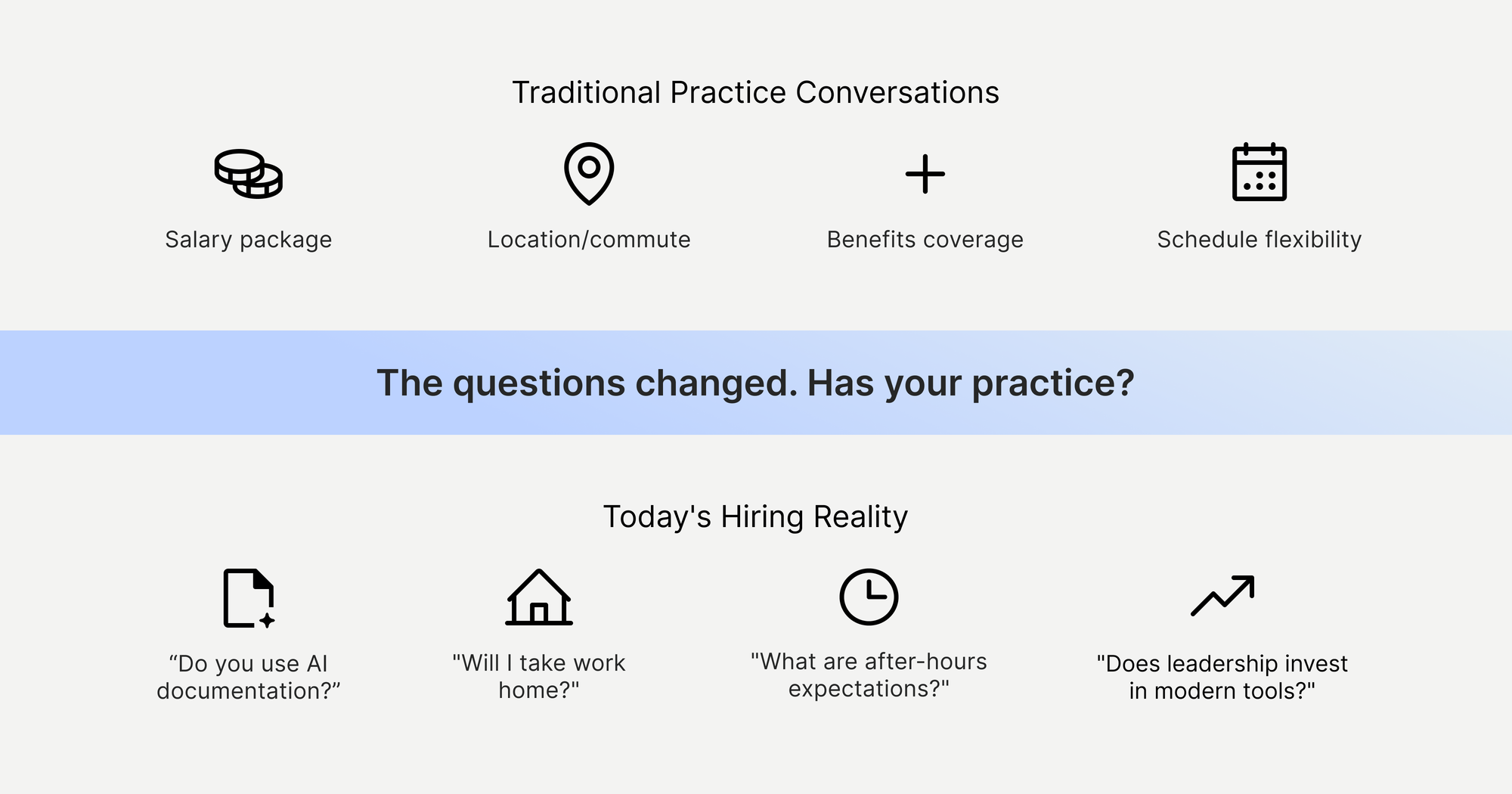
Most independent practice owners still compete on traditional factors: salary packages, benefits, location convenience, assuming clinicians evaluate opportunities the same way they did ten or twenty years ago.
While hiring for her clinic this year, Randi heard concerns about work-life balance surface in every single conversation with potential hires. New graduates asked specific questions about documentation workflows, after-hours work expectations, and whether the practice used AI tools.
The burden of documentation goes deeper than the matter of efficiency. It directly determines where clinicians choose to work. Practices that force staff to complete notes during personal time signal that they value throughput over clinician wellbeing. New graduates read that signal clearly and choose other options.
New clinicians expect tools that support sustainable work, and they skip practices that don't offer them.
Three Pillars of Technology-Forward Practice Design
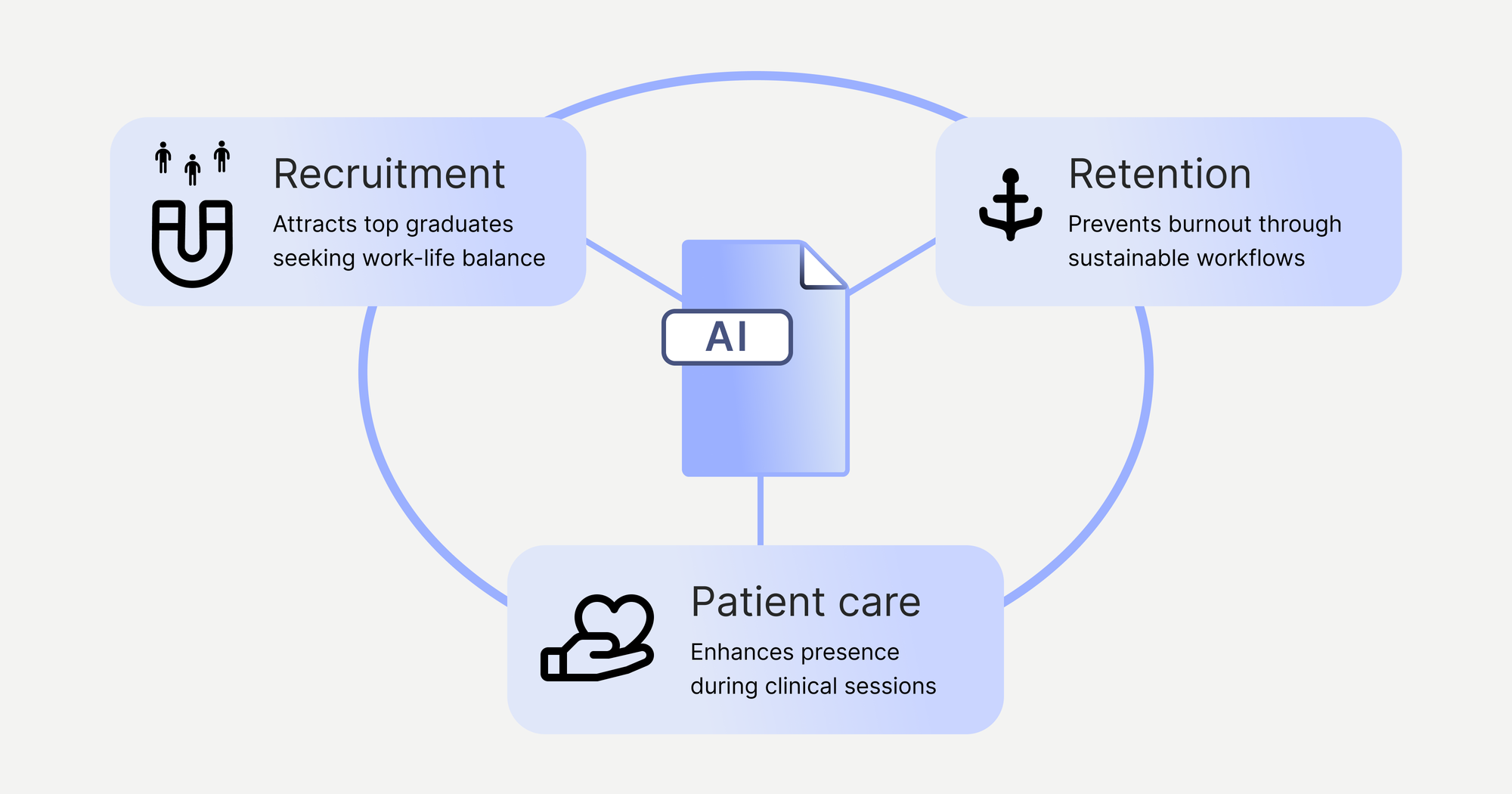
Randi built her technology implementation approach around three core principles that work together to build practices where clinicians want to work.
These pillars address the complete lifecycle of running an independent practice: attracting qualified candidates, preventing burnout that drives experienced staff away, and maintaining the patient relationships that sustain your business.
Most practices focus on one area at a time: hiring, then retention, then patient satisfaction, and treat each as a separate problem. Randi shows how technology adoption solves all three simultaneously when implemented with intention.
Technology as Recruitment Opportunity
Technology adoption communicates organizational values before a candidate ever steps into your clinic. Practices that invest in AI documentation demonstrate they prioritize clinician time and sustainability over outdated ways of working.
Randi positions technology as a core part of her practice’s identity, not simply a nice-to-have feature.
"We need to be a forward-thinking practice. These new grads are coming out of school seeking a group that's innovative, top-notch," she explains.
During recruitment conversations, she leads with how the practice uses these tools to support clinicians at every career stage.
New clinics have the advantage of establishing these expectations from day one by building technology adoption into their practice identity from founding instead of an add-on down the line.
Sustainable Clinical Excellence Through AI-Enabled Workflows
When her practice lost two therapists while onboarding new graduates, Randi found herself carrying an elevated patient load while trying to maintain quality care standards. She was taking her documentation home, and the weight of burnout was getting stronger and stronger.
Within two weeks of implementation, AI documentation changed everything. Randi stopped bringing work home. At the same time, the quality of her notes improved.
"My notes are better for sure. It's remembering things that maybe I wouldn't have," Randi explains. The system captures details she would miss while trying to balance listening, treating patients, and mentally cataloging what to document later.
Create systems that support clinicians throughout their careers rather than letting them near burnout and scramble to save them from the fire. Technology that prevents burnout becomes a retention tool that mitigates long-term hiring costs.
Patient Experience Through Clinical Presence
Randi worried initially about how patients would respond to AI documentation. Would they trust a clinician wearing a lapel microphone?
"I tell them that this is helping me be right in front of them instead of typing on my computer during their session," Randi explains.
The technology enabled Randi to maintain a strong presence during sessions. Instead of toggling between listening and typing, she stays engaged throughout the entire patient conversation.
"It's enhancing the entire experience. I can be present, giving them good conversation," Randi says.
Randi also starts and stops the system deliberately, establishing clear documentation boundaries and explaining what she's capturing and why. This transparency helps build trust with the patient while also exemplifying how care is improving.
Independent Practices Don't Need Permission to Try New Things
Randi belongs to a cohort of practice leaders who see technology adoption as a competitive necessity rather than optional. While larger health systems struggle with bureaucracy and legacy systems, independent practices can move quickly.
"I tend to be the partner that pushes the new technology. We've got to be on the forefront of the things that are coming out," Randi says.
That drive to be at the forefront is behind Randi volunteering for the U.S. Physical Therapy’s pilot program for AI documentation. Within a week, another seasoned clinician in her practice asked to join. Within two weeks, clinic directors from across all 22 locations were texting Randi for guidance on getting started.
While other practices debate whether to adopt AI documentation, Randi’s company has already refined their implementation approach and incorporated it into their recruitment pitch.
"It's important that my team is willing to listen to my input as a clinician who’s been using these tools, take that feedback, and then apply it to the way they operate."
Early adoption gives practices direct input on product development while competitors wait for tools to mature.
Creating Technology-Forward Practice Leadership
Randi's experience implementing AI documentation across multiple practice scenarios shows that being technology-forward works regardless of clinic size or patient population. These principles apply whether you're opening your first location or managing growth across an established practice group.
Make Technology Adoption a Cultural Value
Embed technology experimentation into your practice identity from founding. Make it part of how you describe your organization to candidates, patients, and partners. This positions your practice as a place where clinicians can grow alongside developing tools rather than fight against outdated systems.
Design for Clinician Sustainability First
Evaluate every technology decision through the lens of clinician wellbeing. Tools that prevent burnout become retention mechanisms that reduce long-term hiring costs. Calculate ROI by factoring in decreased turnover, improved recruitment success, and sustained clinical quality.
Build Trust Through Transparency
Turn technology adoption into opportunities to educate patients about care processes. Explain how tools support better documentation and more attentive care. Clear communication about what systems do and why clinicians use them builds trust while differentiating your practice.
Create Learning Loops
Use AI tools for more than efficiency gains. Implement them as training platforms for developing clinicians. Senior staff can demonstrate documentation best practices while new graduates learn clinical reasoning patterns from reviewing AI-generated notes.
Measure Success Through Human Impact
Track technology success through its impact on human wellbeing: clinician satisfaction, family time, patient engagement, staff retention. These metrics reveal whether tools actually support your stated values or just add complexity to existing workflows.
Independent practices face a choice that will define their viability over the next few years. Clinics that embed technology into their culture today will attract the best talent, retain experienced staff, and deliver the kind of patient care that builds sustainable businesses. The practices that delay will find themselves competing for whoever's left rather than choosing from the best candidates available.
Frequently Asked Questions
When should independent practices start implementing AI documentation tools?
Start immediately if you're opening a new practice. Build technology into your workflows from day one rather than retrofitting later. For existing practices, begin as soon as you identify documentation burden affecting clinician satisfaction or recruitment success. The learning curve is minimal—Randi's team achieved proficiency within two weeks.
How do you convince skeptical staff to adopt AI documentation?
Start with willing early adopters who become internal champions. Randi volunteered for the pilot program, and within a week another seasoned clinician asked to join. Demonstrate personal benefits—reduced after-hours work, improved work-life balance, better note quality—rather than mandating top-down adoption. Let results speak for themselves.
What if patients don't trust AI documentation?
Be transparent about what the technology does and why it helps. Randi tells patients: "This is helping me be right in front of you. Have you seen me type on my computer much at all during your session?" She found patients across all demographics embraced the approach once they understood it enabled more attentive care.
How do smaller practices compete with large health systems on technology?
Independent practices actually hold advantages in technology adoption. They can move faster than bureaucratic hospital systems, experiment with new tools without lengthy approval processes, and iterate based on direct clinician feedback. Position these advantages during recruitment by highlighting your ability to implement tools that support sustainable practice.