
Wednesday, March 25, 2026
The Real Cost of Cultural Misalignment


How rebuilding culture from the ground up turned retention into systematic growth
Ben Carlson took over his father's physical therapy practice. It had been shrinking for nearly a decade.
The partners wanted him to modernize marketing. Two weeks of staff interviews showed that was the least of his concerns.
The real problems were cultural misalignment and operational gaps.
Ben spent the next seven years rebuilding culture, removing misaligned team members, and creating systematic workflows that delivered better care for existing patients. His 2024 data showed that his practice grew 8% year-over-year while seeing only five more initial evaluations.
Nearly all their growth came from improving what they already had.
Key Takeaways:
- Misaligned culture creates friction that makes every operational improvement exponentially harder. Fixing team alignment first produces better returns
- Practices that fix culture first unlock the untapped growth sitting in their existing patient base
- Removing high-performing individuals who disrupt team cohesion drives better outcomes than keeping them for their individual metrics
Misdiagnosing the Growth Problem
When revenue stagnates, most practice owners assume the only fix is getting more patients. They invest in marketing campaigns, add locations, or pressure providers to increase volume. The real constraint often sits somewhere else entirely.
When Ben stepped in to oversee his father’s practice, he found a deep lack of alignment.
The team couldn't agree on where the business was going, what mattered most, or how to deliver consistent care. Without that foundation, every operational improvement became exponentially harder. Adding volume would only amplify existing problems.
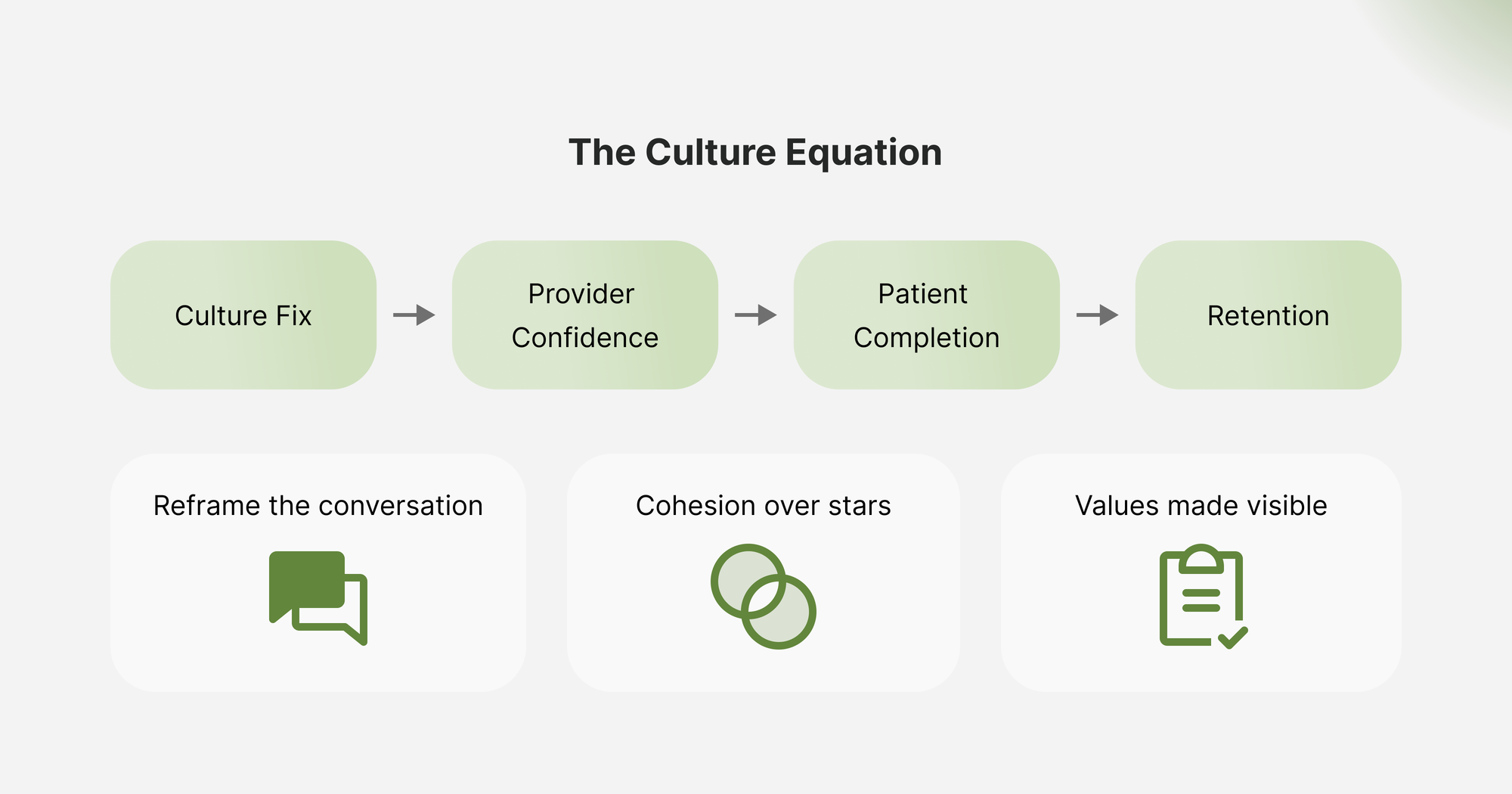
So Ben focused on rebuilding culture before thinking about growth tactics. He removed team members who didn't fit, clarified values so they actually meant something, and built workflows leading to specific outcomes. Only then did retention, utilization, and growth become possible.
Most practices have significant untapped opportunity in what they already have, but accessing it requires fixing culture first. You can't optimize workflows when your team lacks alignment. You can't improve retention when providers don't believe in what they're presenting.
Ben's practice grew not by getting more patients, but by building a culture that allowed his team to deliver better care to the patients they already had.
Shift “Culture” From Buzzword to Actual Revenue
Ben's transformation didn't follow a textbook. He made three specific changes that most practice owners consider either too risky or too soft to matter. Each one directly improved his bottom line.
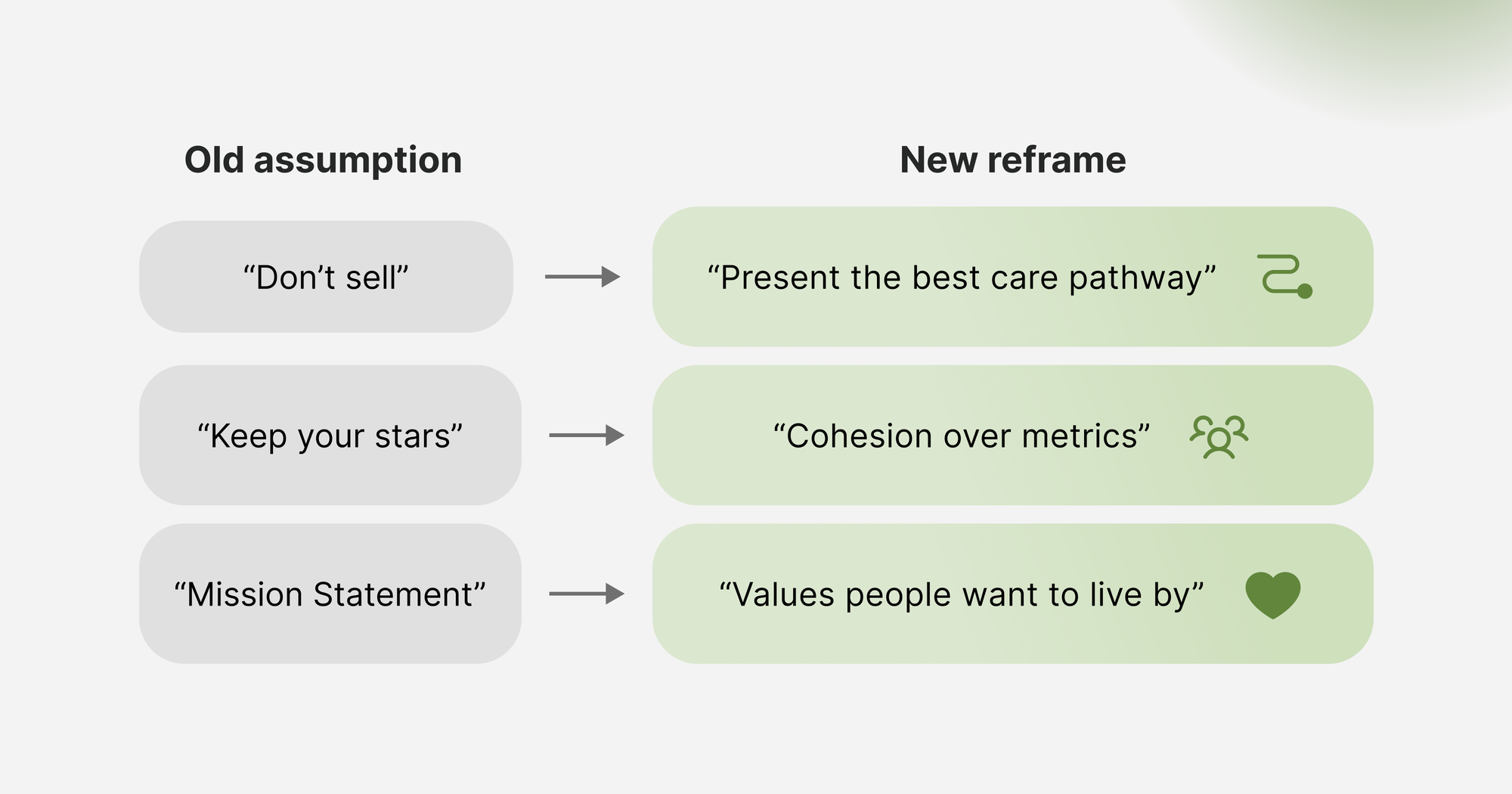
Stop Thinking of Care as “Sales”
Healthcare providers hate "selling" because it feels like pushing services patients don't need. The best clinicians make terrible salespeople for exactly the right reasons: they care more about the patient outcome than the pitch.
Ben asks his clinicians: If money wasn't an issue and you were treating your own family member, what would you provide?
If the answer is "I wouldn't recommend this," you've identified the real problem. You don't believe in what you're offering. But when you genuinely know something improves outcomes, presenting it becomes a clinical responsibility rather than an uncomfortable sales pitch.
Most providers jump ahead and make assumptions about what patients can afford or want to pay for. They skip options they consider too expensive. Ben believes providers should present the best possible care pathway, then let patients make their own financial decisions.
"Don't sell them short," says Ben.
This reframe builds a culture where clinicians operate from a place of confidence rather than discomfort. When your team believes in what they're presenting, that conviction shows up in how they communicate with patients.
They're not hedging. They're not apologizing for recommendations. They're clearly explaining what will help and why.
Patients feel that difference. A provider who believes in their treatment plan creates trust. A provider who's uncomfortable making recommendations creates uncertainty.
When you build a culture that empowers clinicians to present optimal care without guilt, retention improves naturally. Providers aren't second-guessing themselves. Patients aren't left wondering if there's a better option their therapist didn't mention. Everyone moves forward with clarity.
That's how culture translates directly into patient completion rates.
Choose Team Cohesion Over Individual Stars
Ben let go of one of his top three revenue-generating providers. In an industry desperate for clinicians, this looked like a bad bet.
The provider delivered quality care and brought in strong numbers, but they didn't align with where the practice was heading. That misalignment created friction that rippled through the entire team.
High performers who disrupt culture cost more than they offer. Other staff members compensate for the tension. Patient experience suffers. Your best people start looking elsewhere.
Ben's decision clarified priorities for everyone else: team alignment matters more than any individual's numbers.
Write Values People Actually Want to Live By
Ben spent years dismissing mission statements as corporate theater. But when he finally drafted values for the practice and asked for feedback, a team member's response stopped him: "They're good. I think they reflect us as a company, but it just feels like we're still selling to people."
That feeling landed.
Values work when they set expectations for everyone who walks through your door. They shouldn't function as recruiting copy trying to convince potential hires. They should invite people into a shared way of working.
Ben made values visible throughout every renovated clinic, ensuring they were present in consistent graphics and messaging to remind everyone what matters here.
When values invite rather than persuade, they become guidelines instead of corporate decoration. And when everyone in your practice, from front desk staff to senior clinicians, operates from the same set of principles, decisions get easier. Conflicts resolve faster. New hires understand what's expected without constant management.
That clarity eliminates the friction that slows down every other operational improvement you try to make.
An Industry Under Pressure
The physical therapy industry faces a critical challenge that threatens independent practices: the debt-to-income ratio for new clinicians. Unless healthcare addresses the cost of PT education relative to earning potential, recruitment and succession will face significant headwinds.
This makes culture more valuable than ever.
When new graduates carry six-figure debt loads into careers with constrained earning potential, they evaluate opportunities differently. They look for practices where they won't burn out. Where leadership values their time. Where they can build sustainable, long-term careers.
Ben's seven-year culture transformation positioned his practice to compete for talent in this constrained market. Aligned teams retain staff longer. Clear values attract clinicians who want to work somewhere that stands for something. Systematic workflows prevent the burnout that drives people out of the profession entirely.
Culture isn't soft. It's the foundation that determines whether your practice can attract talent, retain patients, and grow sustainably.
Independent practices can continue assuming growth requires aggressive patient acquisition, or recognize that most immediate opportunities live in optimizing what you already have. Practices that align culture, systematize retention, and empower teams will build sustainable businesses. Not only that, they’ll attract both great clinicians and loyal patients.
The practices that keep chasing new patients while ignoring the internal cracks in their foundation will keep wondering why growth feels so difficult.
Frequently Asked Questions
How long does cultural realignment typically take for an established practice?
Ben's full transformation took seven years, but meaningful shifts can happen faster. The critical first step is achieving leadership alignment on vision and values. This might take 3-6 months of honest conversation. Removing misaligned team members and replacing them with better fits adds another 6-12 months. Codifying values and embedding them into daily operations is ongoing.
Most practices see measurable improvements within 12-18 months if leadership commits fully to the process.
What if I can't afford to let go of high-performing providers who don't fit culturally?
This question reveals the core misunderstanding. You can't afford to keep them. High performers who disrupt culture create friction that affects your entire team. Other staff compensate for the misalignment. Patient experience suffers. Your best people leave.
Calculate the true cost: decreased team morale, increased turnover, reduced patient retention, and the energy spent managing conflicts. That high performer's individual metrics don't offset the systemic damage they cause.