
Wednesday, April 22, 2026
The Market Physical Therapy Always Wanted Is Finally Here


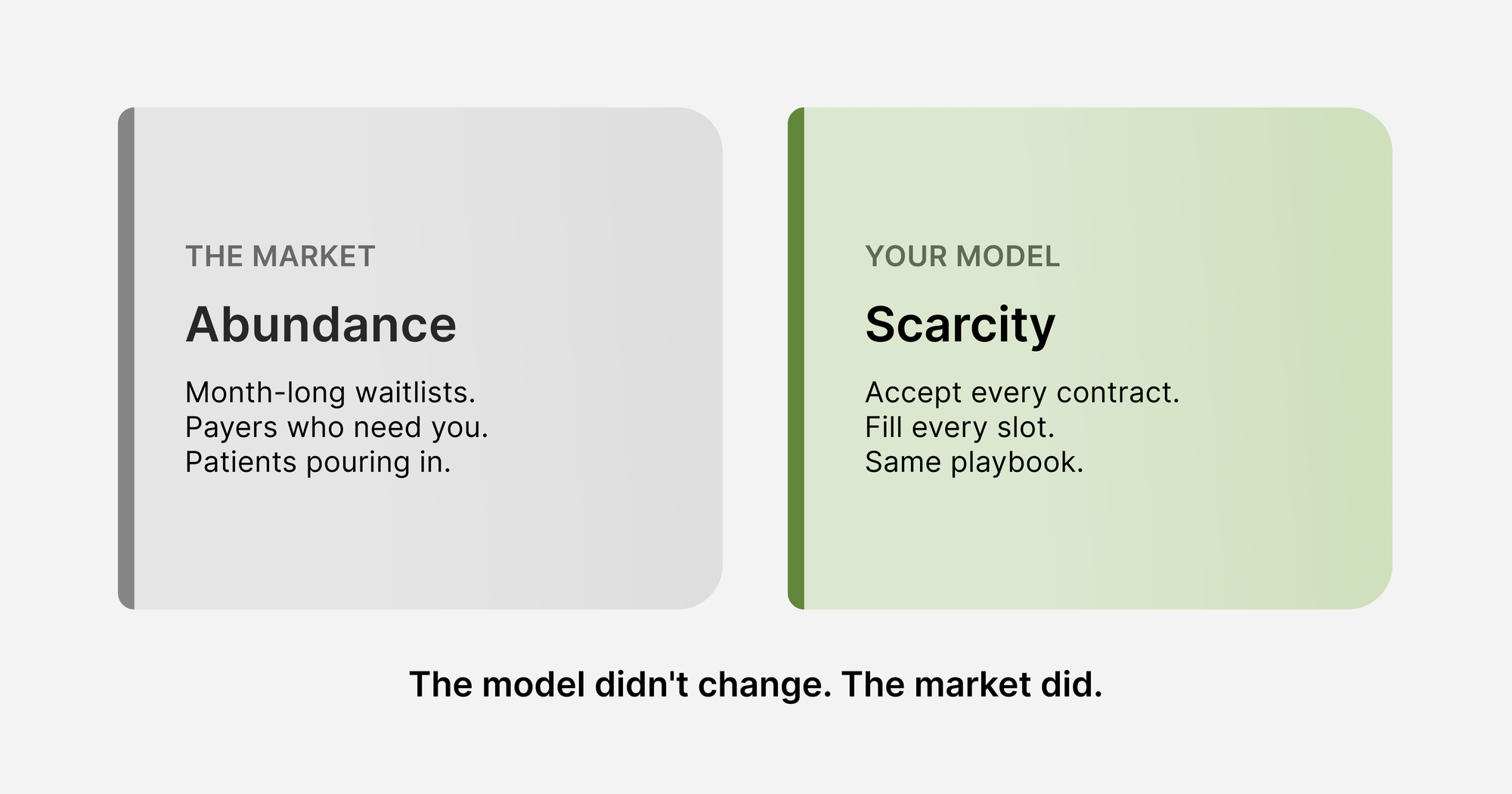
But the profession is still running a scarcity-era operating model in an abundance market.
PT is winning. Referrals are pouring in. Every other MSK specialty is being told to send patients to PT instead of operating, injecting, or imaging.
Yet practices with month-long waitlists are still saying yes to payer contracts that lose them money.
Ben Barron sees that PT has everything it fought for, but now that their plates are full, no one is taking a real bite. Reimbursement rates are down and demand is sky high. There has never a better market, so why are practices still operating like they’re only being served crumbs?
Key Takeaways:
- PT shifted from scarcity to abundance, but most practices still operate with workflows designed for competing over limited patients.
- The standard care model artificially limits capacity and prevents practices from reaching 90% of potential patients.
- Practices with waitlists now have negotiating leverage with payers they've never had before, but most aren't using it.
The Profession Misdiagnoses Its Constraints
Most practice owners point to external threats: reimbursement compression, labor shortages, competitors down the street. Ben sees the real constraint coming from inside practices.
For decades, PT operated in what Ben calls the "10% problem." Only 10% of people who could benefit from physical therapy ever accessed it. Practices fought over that small slice. Scarcity shaped everything: which payer contracts to sign, how to design protocols, where to deploy staff.
That world is gone.
"There are way too many patients that need to be seen by way too few people," Ben explains. "That creates a tremendous business opportunity for anyone that is able to control the delivery of care."
Independent practices are missing out because they have been optimized so intensely for the patients they're already serving, never building capacity to reach the 90% who still aren't getting through the door. The market made its shift, now practices have to acknowledge it's their turn to meet it.
Operating in an Abundance Model: Define “Good Care” by Patient Need
The physical therapy business model was designed to compete for patients. It needs to be redesigned to serve them at scale. That pivot starts with a single question.
Ben asks his team: "If money wasn't an issue and you were treating your own family member, what would you provide?"
Most PTs answer instantly. They describe care that looks nothing like the forty or sixty minute, three-times-weekly protocol they're running. They talk about front-loading education, teaching patients how to self-assess progress, building check-ins around clinical milestones instead of arbitrary week markers.
They describe a model where the therapist's expertise drives the relationship, not the reimbursement structure.
That gap between what PTs know is right and what the business allows them to do has been the trade-off for two decades. Abundance eliminates it.
When you have a waitlist and leverage with payers, you can finally design care around personalized clinical judgment instead of a singular protocol optimized for billing structures.
A post-surgical ACL patient needs frequent in-clinic contact early, such as manual work, movement assessment, and load progression under supervision. That's high-touch, and it should be.
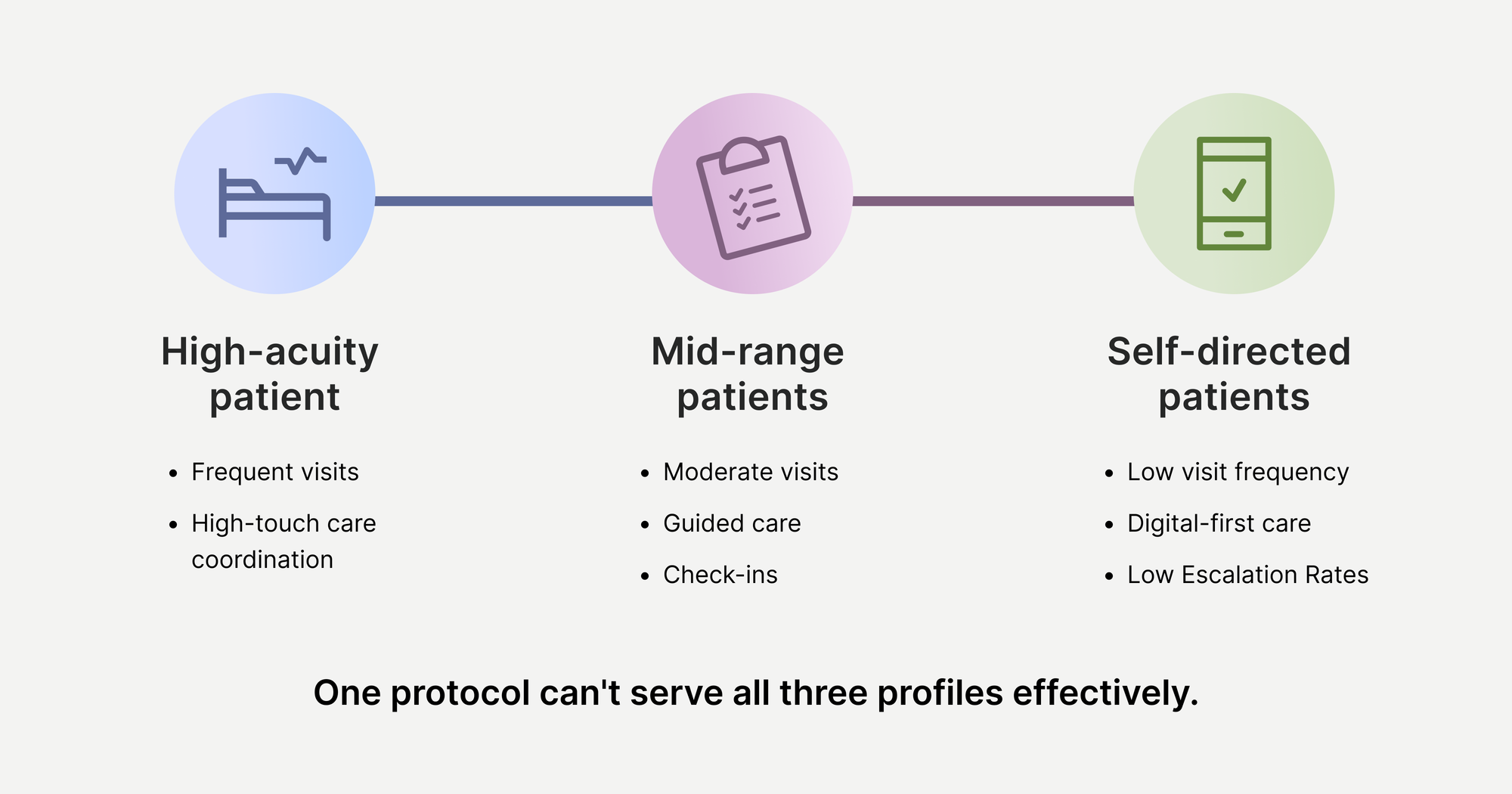
A chronic low back pain patient that’s sub acute, has no red or yellow flags, and who's been through PT twice before needs a different model: expert guidance on what's actually wrong, a program they can own, and accountability check-ins that confirm they're progressing.
Treating both patients identically doesn't serve either one well, and it prevents you from reaching the 90% of people with MSK issues who never access care at all.
Abundance means PTs can start optimizing for outcomes and reach. It’s letting the profession operate the way it was supposed to from the beginning.
Urgency From a Constricted Pipeline
"If you continue to do what you're doing for the next 15 years in the exact same way, you are going to make significantly less money doing it," Ben warns. "Your business solvency is at risk, which means you might be putting at risk your ability to care for your community if you don't do it in a different way today."
Reimbursement compression is a trend that has been consistent for two decades.
Favorable market tailwinds cover up the cracks in the entire system’s foundation at the unit economics level. Practices that feel busy and solvent today may be running models that become unsustainable over years. The current demand gives practices the negotiating position they've never had before. This is their chance.
How Practices Can Win This Market
The shift from scarcity to abundance is the most fundamental change in PT economics in 30 years, and it requires different competitive behavior.
"The person next door is not your competition," Ben says. "The competition is yourself. How do you create the business you want to create?"
Think about the patient populations you really want to treat, the kind of care you can deliver consistently, the sort of money you want to be taking home from your business every year. And consider carefully what it will take to get there.
Answering those questions will ensure you’re equipped to deliver truly excellent patient care to your community, and it will set you apart in this market.
Revenue and profitability are core components of the equation. Keeping these things in mind can feel like prioritizing your business over your patients, but structurally, they’re what make great care possible.
There’s never been a better time to take a hard look at your finances and build sustainably for the future. In these current market conditions, PT practices have the opportunity to build the care models they’ve always wanted. The question is whether they’ll take it.
Frequently Asked Questions
How has the physical therapy market shifted from scarcity to abundance?
For decades, only 10% of people who could benefit from PT ever accessed it, forcing practices to compete over a limited patient pool. Today, PT is the only MSK service line the healthcare system actively pushes patients toward, creating unprecedented demand.
What does it mean to match care intensity to patient need in physical therapy?
Matching care intensity means designing treatment protocols around what each patient clinically requires, not what billing rules optimize. A post-surgical ACL patient needs frequent in-clinic contact with manual treatment and supervised progression. A chronic low back pain patient who's been through PT before needs expert guidance, a self-directed program, and accountability check-ins.
The standard two-to-three visits weekly for six-to-eight weeks protocol doesn't serve either patient optimally.
Why is reimbursement compression a threat to physical therapy practice solvency?
Reimbursement compression has been consistent for two decades and shows no signs of reversing. While current demand may make practices feel busy and solvent, the unit economics are eroding underneath.
Practices that don't redesign their care models to serve more patients without proportional cost increases will find their margins compressed to unsustainable levels over time, putting long-term business viability and community care access at risk.